Justice Playthrough #69: Dirty Aces

Aw yeah, the sex number playthrough gives me DIRTY Aces. Is it a DIRTY game?

… eh, not really. But that’s hardly the game’s fault, is it.

Page 41, Game 22: Dirty Aces by Ben “Bee” Scerri, Red World Press

Dirty Aces is a tabletop RPG meant to simulate a neo-western style setting. Something like Stephen King’s The Dark Tower, or Firefly, or Stephen King’s The Dark Tower, or The Expanse, or Stephen King’s The Dark Tower, Stephen King’s The Dark Tower, Stephen King’s The Dark Tower, Stephen King’s The Dark Tower, or Stephen King’s The Dark Tower.

I get the impression the author is a bit of a Dark Tower fan.

The connection to a specific setting is honestly pretty loose; most of the game is devoted to the rules for using two decks of cards for both character creation and conflict resolution. Those mechanics are … interesting. I’m not sold on them. But I could see them working.

Character creation involves using cards to define four main attributes, each one of which has a corresponding suit — mental strength (hearts), mental agility (diamonds), physical strength (clubs), and physical agility (spades). Oddly, the character creation rules as defined mean that there can be no more than four players aside from the GM — and the game recommends having EXACTLY four players.

You’ll use cards to represent your strength in those areas. However, your character concept is unusually fluid for a TRPG, because you can take the cards you used to define your character and use them as part of the game’s bridge-based conflict resolution. What’s more, the character creation rules specify that your starting card in each will be somewhere between a jack and an ace, so even the attribute where you’re “weakest” is honestly, according to the game’s mechanics, still pretty strong.

So once you make use of your character’s tremendous strength, your character will stop being tremendously strong, because whatever card replaces that attribute is unlikely to be as good as the one you spent.

There are also some FATE-style attributes you can create and access during the game. These, at least, are actually very stable.

Conflict resolution is handled by bridge, where the GM sets the trump suit based on the general parameters of the situation. All players get five cards, in addition to the big cards helping making up their character sheets. If the GM takes three tricks, they win; the players need to take X tricks, where X is determined by the difficulty of the task at hand.

The game encourages you to describe each trick as part of the ongoing conflict, with the strength of the card representing what you’re doing. This feels weirdly prescriptive to me; in D&D, for instance, I’ll describe what I’m doing first, THEN roll the dice to see how it goes. Here, I’m being asked to tailor what I’m doing to match the game mechanics.

What’s more, the game encourages the GM to make bad stuff happen to the players when they go off the trump suit, even if they take the trick.

The difficulty for an average task is 6. That means the players must collectively take six tricks between them to succeed on something AVERAGE. That seems really slow. I’d rather just throw a die, be done with it, and let the story move along, you know?

As always, I’m not playing the game, so this is hardly a fair review. Maybe it works, very well. I’m a bit skeptical. But I could be wrong.

Do I want to play this game? Not really, to be honest. But if a friend were pumped, I’d gladly give it a try.

Much like I’m about to try:

Page 5, Game 20: a new life. by Angela He

“When your loved one hurts you, what do you do? A classic love story about letting go.”

Another visual novel? I’m thinking visual novel. They really haven’t impressed me yet, but fiction is hard, folks. If that’s what I’m in for, I’ll gladly give it a try.
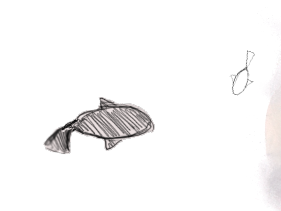
Justice Playthrough #68: Guppy

Wait, WTF?!

Page 11, Game 11: Guppy by Christiaan Moleman

“Okay, let’s see what this game is all about … looks like I’m the titular guppy, and I’m supposed to go find some food. Dope. I can relate to these goals.

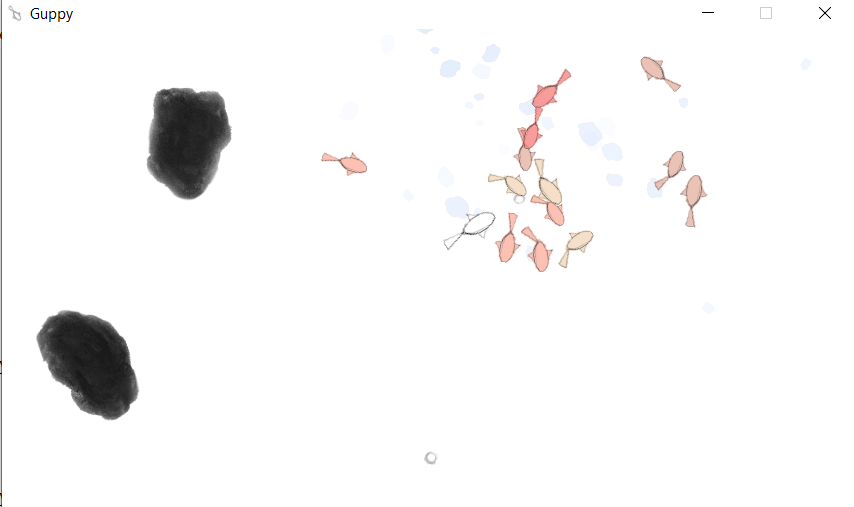
“All right, low-fi watercolor look to the graphics. I’m feeling it. Very chill, very zen. Nice mellow background music, too. Good unified look and feel to the game; feels simple, but not cheap or haphazard. I guess the arrow keys move me around … oh, neat! Left arrow moves my fish-tail one one way, right arrow moves it the other. Just tap ’em to get my fishy butt moving. I don’t think I’ve seen this movement mechanism before. Definitely feels fishlike. I’m digging it.”

Hello, fish friends! Have you seen any food?

“All right, time to find some food. What does ‘food’ look like? Is it those bubble things? They seem to disappear when I swim over them, but otherwise the game doesn’t react. There doesn’t seem to be any sort of fish-hunger-ometer here. Wait, is that a bug? Let me wiggle over there … yup! The game just gave me a point! I’m here to munch bugs!

“Oh, hey there’s a larger fish!”

The end has come for thee, little one

“Should I be wor– FUCK ME DID THAT THING JUST EAT ME?!”

So. Guppy is a zen, meditative little game about wiggling like a fish, eating yummy bugs, and FLEEING IN FUCKING TERROR FROM THE GRIM FUCKING SPECTER OF DEATH. The visual and aural tone of the game made me think that getting tagged by DeathFish would be some sort of minor setback, or slap on the wrist. Instead, NOPE. Ya DEAD, son. Meditate on THAT shit.

DeathFish does not appear until you eat your first bug. Perhaps he is their avenger. Live by the food chain die by the food chain, biyatch.

There are lily pads that make you appear shadowed, but they offer no respite. You can attempt to distract your pursuer by leading it into the school of goldfish hanging out down here with you, but it does not want them; it is here for you. It is your personal tormentor. Only you can sate its hunger.

I have no idea whether to characterize this game as a bizarre tonal misfire, or a work of subversive genius. It is definitely unique. I can confidently say I have never played a game like this before.

What the hell, recommended. If only so you too can experience the sensation of getting shivved by Bob Ross.

Alright, next game is the sex number. Don’t be a kids’ game don’t be a kids’ game don’t be a kids’ game….

Page 41, Game 22: Dirty Aces by Ben “Bee” Scerri, Red World Press

“Win or Lose Together. Touchstones: Firefly, The Dark Tower.”

Whew.

Justice Playthrough #67: Dungeons of Loot

NOPE.

Page 30, Game 13: Dungeons of Loot by Luke Parker

In the game’s defense, the page does indicate that it’s in an “alpha” state, so my expectations shouldn’t be that high.

I don’t know if I can get my expectations this low, though. This is pre-alpha.

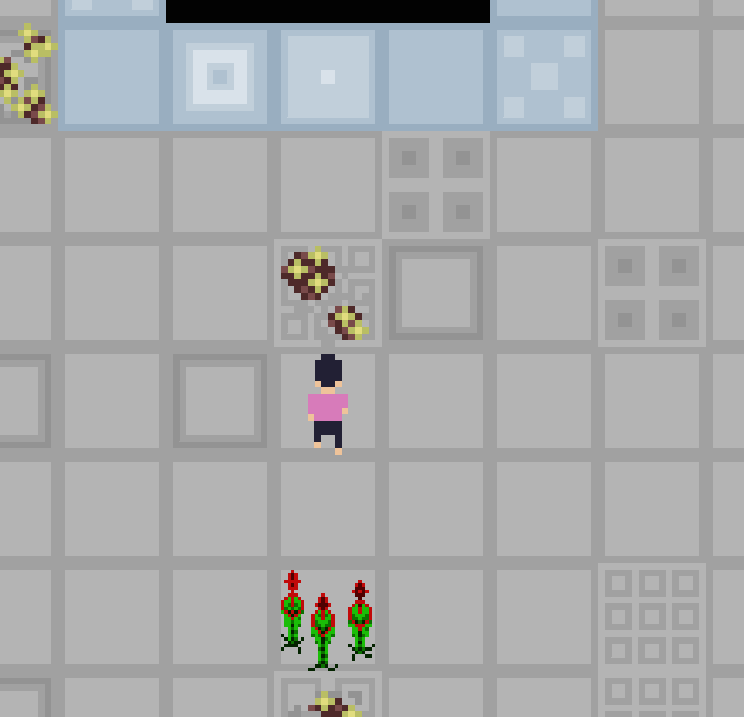
For a game named “Dungeons of Loot,” it’s damned short on loot.

Know what in that picture is loot? NOTHING. Those things that could plausibly be gold coins on the floor? As far as I can tell, they do nothing. Neither do the plant-looking things.

The dungeons DOES seem to be changing state as you wander through it, but I had no idea what it meant or whether it was responding to my actions or was just on a timer.

Speaking of timers, you’ll eventually be informed that you are now too sad to pick up any more loot and the dungeon is now collapsing more quickly. Which raises two lines of questioning:

THE DUNGEON IS COLLAPSING?! How can I tell? How is this impacting me? Has it been collapsing all this time and I’m just too bloody thick to have noticed? Is this a timed thing, or do I have some ability to influence it? Am I supposed to get back to the starting point for safety, or seek shelter deeper in?!

Also, WHAT LOOT?!

In one play, I DID find a room that had treasure chests in it. They all had pages from a princess’s diary. Not quite the loot I had in mind, but by that point, I was glad for it.

The game ended by informing me I had fallen into the void or something. I have no idea how. Did I step on the wrong thing? Did I run out of time?

There’s no readme in the download that I could see, there are no instructions I could find on the game’s page. I want to give this thing a fair shot, but at this stage, it’s completely impenetrable to anybody who hasn’t been programming it.

There may be a fun game here somewhere, but the dev has a lot of work in front of them to bring it to the surface.

Perhaps this one will be better:

Page 11, Game 11: Guppy by Christiaan Moleman

“2D watercolor fish simulation”

The fish are simulated with watercolors? I’m simulating fish that do water colors in their spare time?

Sounds pretty down-tempo and chill, regardless. Let’s take a look.

Justice Playthrough #66: Monster Pub Chapter 2

Oh, it’s a video game!

Page 14, Game 12: Monster Pub Chapter 2 by alex ilitchev

The stub description was “A casual narrative game about making friends!” Seriously, doesn’t that sound like one of the shortie RPGs I’ve been stumbling across? Define what kind of monster you all are, then roleplay chilling in a bar. Could be simple, could have some structure, will definitely lend itself to some boozin’s. I was kinda looking forward to it, actually.

But this is all right, too.

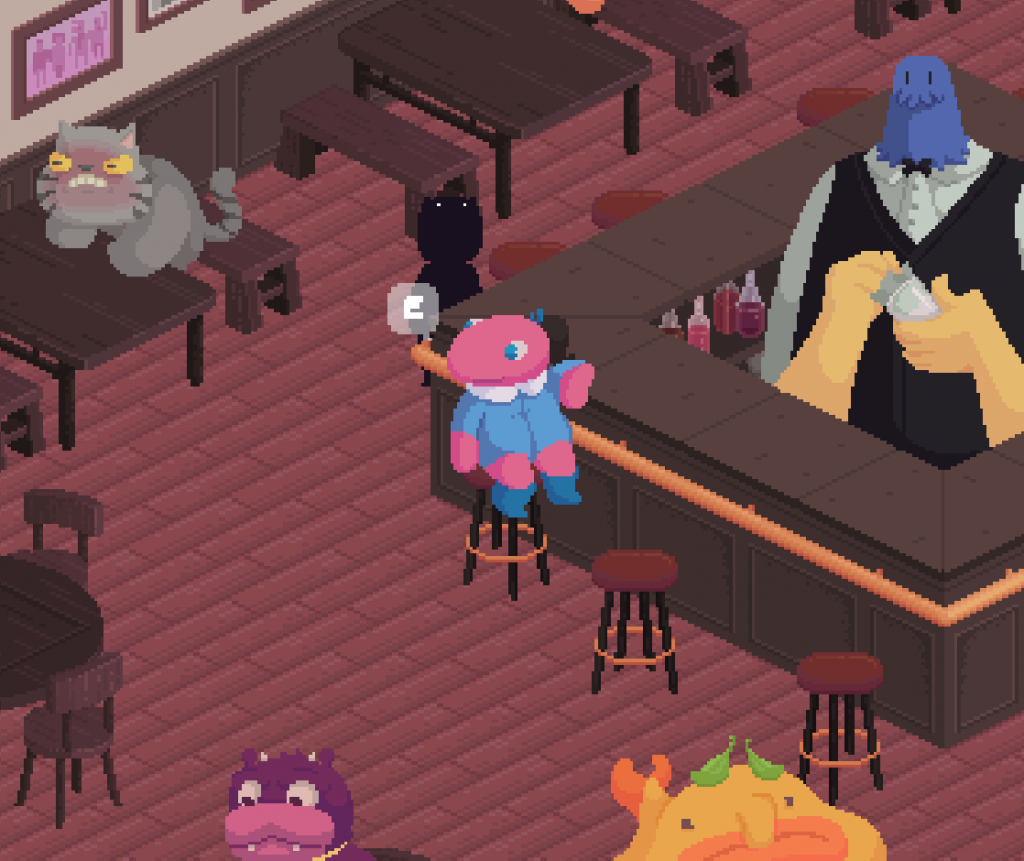
You’re a monster, you’re at a bar hanging out with other monsters.

That’s the game.

Getcha drink on

Make the rounds, chat. Some people have a little to say, others will have a full-on conversation with you — even the bartender, who will get you a drink. (Just the one. Monster Pub 2 does not encourage binge drinking.) There’s your buddy the fanfic writer, there’s a grumpy cat, there’s a mail carrier who’s a tad less dedicated to their job than Cliff Claven was, lots of folks.

How’s your day, muppet buddy?

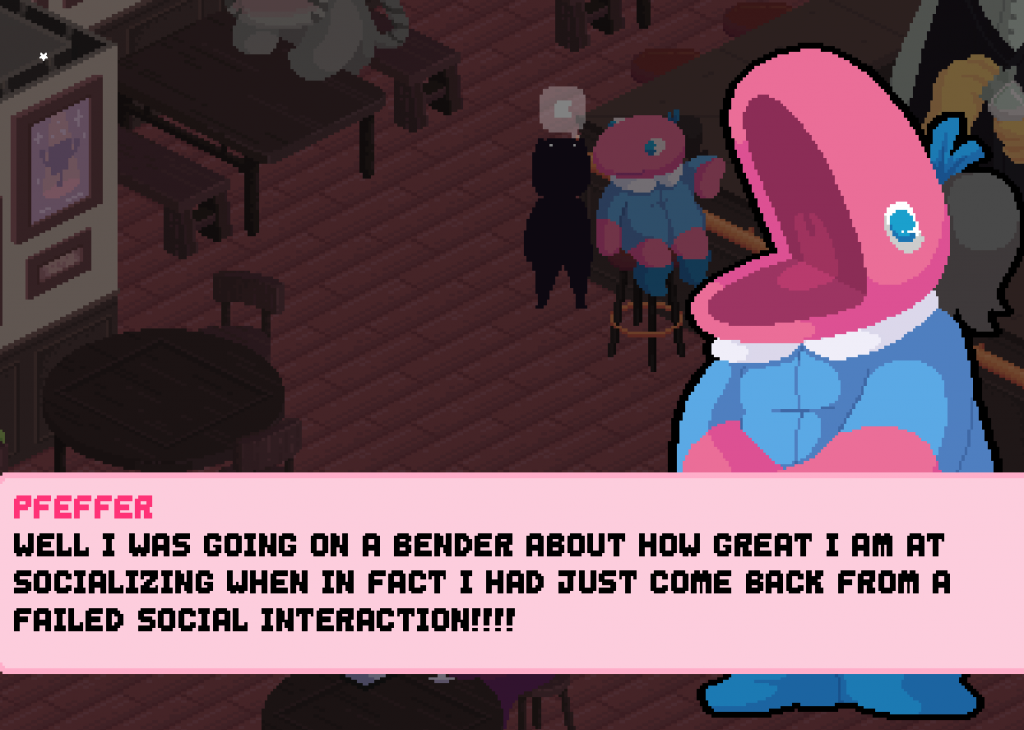
Just … be warned. Interacting with the other monsters comes with risks. They may ask you to … play cards.

You cannot say no to cards. When cards are requested, cards must be played. It’s monster law.

Do not screw around with monster law.

FUCK

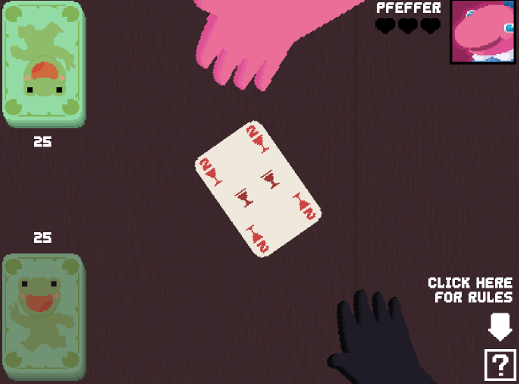
This would be a very chill, pleasant game about just hanging out and chatting … if it weren’t for the card games. There’s a two-player game and a solitaire game, and neither of them are particularly good. I’m not sure what exactly the rules in the solitaire game are supposed to be, save that I don’t know if it’s possible to actually lose. The two-player is just a combination of war and slapjack, and I found it wore out its welcome long before it was actually done. One game I actually just threw to get it over with, but the overall game seemed to get grumpy with that, so I tried to crush my “friends” as fast as possible to get it to move along.

I gather this is the second in an ongoing series of games, but it’s clear you don’t need to have played the one that came before.

Still, if you can overlook the card bits, it isn’t terrible. I actually quite like the vibe it was going for. I exported the friendships I made so that I can import them into Part 3 should I come across it, which I won’t be dreading.

Who knows, maybe we’ll get to play better card games by then.

Actually, wouldn’t that be insano-pants if I rolled that as the next game?

Page 30, Game 13: Dungeons of Loot by Luke Parker

“No Fight, Only Loot!”

You know, there was only a 1/1650 or so chance of that actually happening. And you wouldn’t have believed me if I had rolled it. I mean, I wouldn’t have believed me. I still don’t totally believe that I rolled Page 1 Game 1 just a few days ago, and I’m the one who rolled it.

Anyway. Looting IS one of the best parts of a dungeon run. Let’s see what happens when you skip that tedious “Earn it” nonsense.

Justice Playthrough #65: A Guide To Casting Phantoms In The Revolution

Back to the tabletop we go!

Page 21, Game 24: A Guide To Casting Phantoms In The Revolution by World Champ Game Co.

You and the rest of the players are all a cabal of revolutionary occultists. The French Revolution is almost at hand — and you lot have a magic phantom-summoning lantern. How will this lantern help you aid the revolution? Let’s find out!

And the game is strangely emphatic that you will be AIDING the revolution, and it will be the FRENCH Revolution at that. Early in the rules, they specify “We’re not monarchists or royalists or bootlickers. If you want to play a game that involves the subjugation and disenfranchisement of the poor, look elsewhere.” Followed by a quote that begins “If you’re a fascist, you’re not welcome to play this game. It’s against the rules.”

To which I can only say … huh? I mean, if a game tells me that I’m a revolutionary, I’m usually willing to be all “Okay, I’m a revolutionary!” for at least the first game. Turning a game’s premise upside-down is generally best saved for after you’ve played it a few times. (Even then, “Pampered aristocratic twits attempt to thwart revolution using occult powers they barely understand and cannot possibly control” simply oozes with satirical potential.) And the “No fascists” rule … I have no beef with that, but I have to assume that if it warrants an explicit rule, it must have been a really serious problem during playtesting. I humbly submit that if a recurring problem in your French Revolution RPG is players derailing the sessions with proclamations like “Guys, we have to SUPPORT the king because Mussolini raised some extremely valid points!”, perhaps you need to choose different playtesters.

Anyway. Play begins! You create your cabal. Do note that you’re supposed to be playing the cabal as a collective and not necessarily lay claim to individual characters, but you’ll each be in charge of creating two of them; I suppose you should avoid getting attached.

From there, you’ll be using a surprisingly fiddly mechanism of rolling dice to create the first phantom you’ll be interacting with. Unlike a lot of the RPGs I’ve seen, this one is somewhat component-intensive — and that’s one of the most appealing things about it. You have a big ol’ pentagram for your dice rolling, a bunch of cards with symbols on them … hell, you even have the magic lantern represented as a dice roller. You interpret the dice you rolled, give your phantom some goals, and then move onto the scenes.

The game encourages you to play a large number of fairly short scenes, involving the cast of characters you’ve created and the supernatural entities they’ve enslaved, perhaps unwisely. You’ll be figuring out everybody’s goals and character arcs as the game progresses.

It’s hard to know how to give games like this a fair shake — I don’t want to ignore them, but I’m not hard-core enough to devote the time to actually gathering-up a group to play them. (I could claim “pandemic,” but it’s laziness. We all know damn well it’s laziness.) I’ve basically been defaulting to asking “Does this game make me actually WANT to play it?”

And the answer here is … maybe? Sort of? The mechanisms that turn dice-rolling into a kind of occult divination tool look cool and thematic as hell. The rules are a bit fiddly, but I don’t mind; a playthrough would tell me whether they’re the kind of fiddly that adds a sense of structure, or the kind of fiddly that’s just annoying, so may as well give it the benefit of the doubt.

But even as a bit of a lightweight Francophile (for real, you guys, Paris is WONDERFUL), I’m not sure I know the French Revolution well enough to do it justice … and the game is weirdly adamant that I get over that shit and EDUCATE MYSELF, dammit. This is not a worldbuilding exercise, you are not to port this game to a setting or time period you might be more comfortable with, this is the FRENCH. PERIOD. FUCKING. PERIOD. REVOLUTION. PERIOD.

I’m sincerely a bit put-off by what feels like the authors of the game wanting to exercise iron-clad control making sure that you PLAY THE GAME THEY WANT YOU TO BE PLAYING. And … guys, it doesn’t work like that. You create a thing, you release the thing into the world, people are gonna do what they want to with that thing. If people take what you created and do something that isn’t what you envisioned — or even runs directly counter to your intentions — that’s just the risk you run when sharing your creation. If you’re not okay with that, don’t publish. Just run the game for your friends, or at cons.

And then if somebody asks you where they can buy a copy of this fun game they just played with you, tell them the truth: THEY CAN’T. Because they might fuck it up. And that just isn’t acceptable.

I wonder how this next game wants me to play?

Page 14, Game 12: Monster Pub Chapter 2 by alex ilitchev

“A casual narrative game about making friends!”

Sometimes, you just wanna go where everybody knows your name. And screams it in abject terror.

Justice Playthrough #64: Bear-ly There

“What if physics, but stupid? Also, bear!”

Page 45, Game 15: Bear-ly There by Pale Moon Games

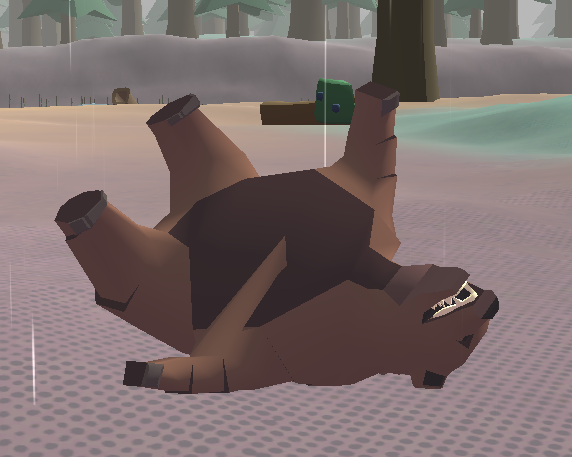
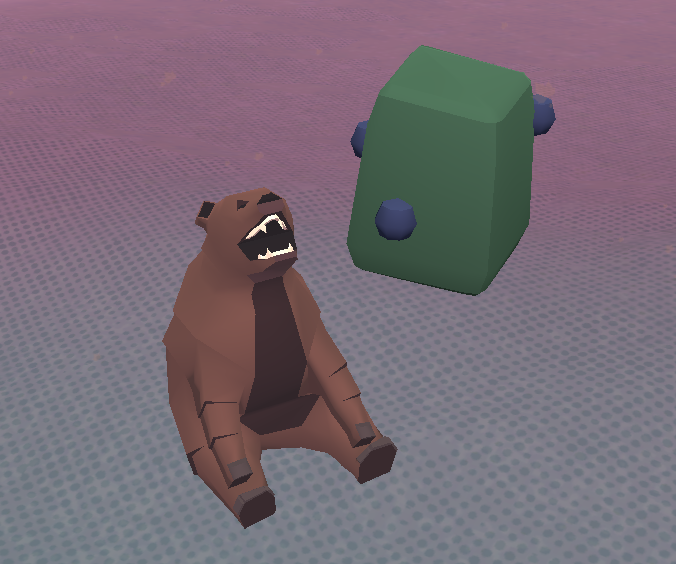
You are Barris the Bear. It is time for you to gorge yourself in preparation for next winter’s hibernation. Unfortunately, you are also an abject failure of evolution, and are not well-suited to this or any other task.

Do not let this stop you.

Taking on the world

Go get ’em!

Bear-ly There is a spiritual successor to QWOP or CLOP, only not as infuriating. You can make Barris “jump” (actually a kind of fitful spasm) in the direction you have the camera pointed, and you can also have him bite whatever happens to be near his mouth.

As a method of locomotion, this is neither dignified nor all that effective. But a bear’s gotta do what a bear’s gotta do.

The berries … so close….

My first play, Barris starved.

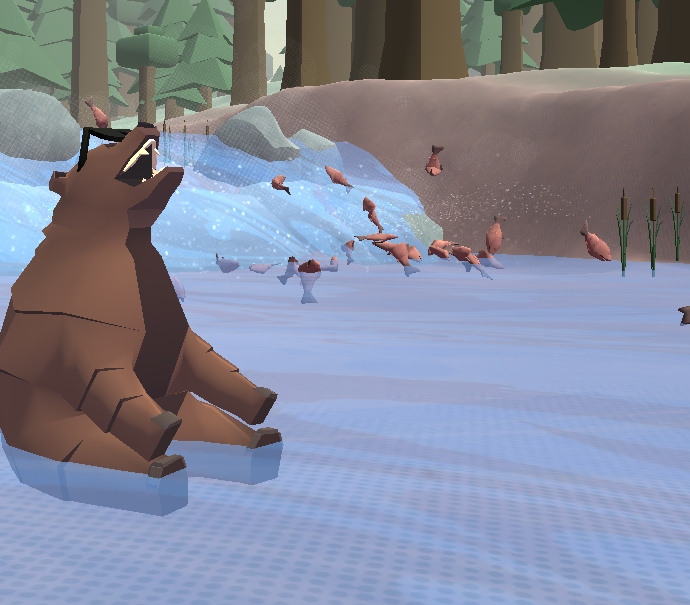
But then I discovered … the river.

BEHOLD THE PROMISED LAND

Aw, yeah.

But gorging yourself on salmon is only half the battle. Then you have to … return to your cave.

Homeward bound

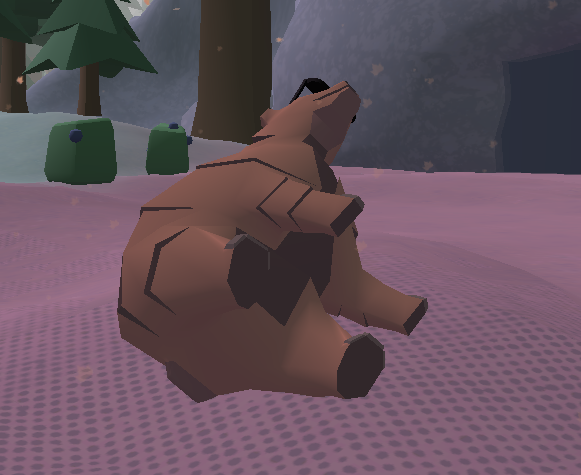
Also, you might find some sunglasses. Just roll with it.

This is yet another entry in the “More A Joke Than A Game” canon that redeems itself by honestly being a good joke. Making this bear spastically ragdoll his way across the landscape while frantically biting in the hopes that food will wind up in his mouth does get old … after a few playthroughs. Until then, it’s pretty goddamn funny.

Just don’t poop.

DO. NOT. POOP.

Does this game have a “poop” button?

Page 21, Game 24: A Guide To Casting Phantoms In The Revolution by World Champ Game Co.

“A Story Game of Magic Lanterns, Political Revolution, and Pentagrams.”

Magic? Revolutions? Demonology?

I’m thinking Rasputin.

So yeah, “poop” is an option here.

Justice Playthrough #63: 1977: Radio Aut

Okay, this is how you do short interactive storytelling.

Page 57, Game 4: 1977: Radio Aut by Alex Camilleri

Peppino Impastato was a Sicilian political activist who opposed the Mafia in the 60’s and 70’s; the game places you in his shoes, making you the protagonist at various key moments in his life.

This is barely a game — but it IS effective. Sometimes you can make some choices. Sometimes your choices don’t matter. Sometimes they’re not really choices at all.

I’ve encountered a decent amount of interactive fiction in this playthrough, and Radio Aut stands out for its discipline and simplicity. It doesn’t fuck around. It doesn’t get lost in the weeds. It is stripped down to its own essentials and tells the story it’s here to tell — nothing more, nothing less.

Honestly, it’s not as much a game or a story as it is a tribute. The author clearly has immense respect for the brave motherfucker at the center of this game, and sought to share that respect with others.

He succeeded.

The game will take about five minutes of your time, and is playable via browser at the link above.

Rest in power, Peppino.

Up next:

Page 45, Game 15: Bear-ly There by Pale Moon Games

“Help Barris bulk up for Winter, we are going to need a lot of food!”

I anticipate a hungry bear and a fuckton of bear puns.

I’m there for it.

Justice Playthrough #62: Catlandia: Crisis at Fort Pawprint

One of the more intriguing misfires I’ve yet run across.

Page 56, Game 25: Catlandia: Crisis at Fort Pawprint by catlandia

Normally, my speculation about the next game based on its title and stub description tends to be wildly off mark. But when I saw the description of “Be a cat,” my response was “So, knock shit down, nap in sunlight, and lick myself?”

Catlandia went three for three.

My hopes went up as soon as I got to the character creation screen, which allows you to build your own cat:

Set all options to MAXIMUM CHONK

So you’re a cat, serving in Fort Pawprint. But oh, noes! The commander’s beloved teapot has gone missing! Whatever shall you do?

Well, duh.

Me, I napped.

But once I could be arsed to get out of bed, I immediately set forth on an adventure, featuring dogs and dog factions and angry raccoons and such.

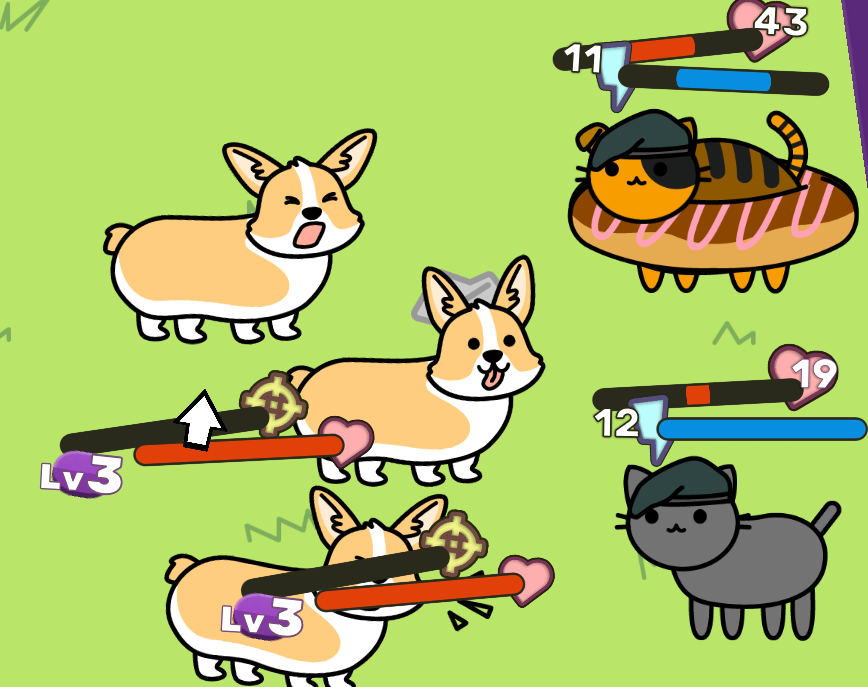
The core gameplay is, believe it or not, a Final-Fantasy-esque turned-based fighter. Your turn comes, you decide what you’re gonna do to the fearsome opponents arrayed against you.

Fuck! Corgiswarm!

Beat ’em down with the various items and abilities at your disposal, move on.

Fighting is the core of the game part of the game. And it kinda breaks my heart to say this, but … it isn’t good.

Where to begin … fighting does a terrible job of scaling with your increasing abilities. Early wandering monster fights were reasonably tough, and the first mini-boss encounter kicked my ass (after totally exhausting my resources) and forced me to gain a level before I could come back and plausibly win it. But the fights get easier and grindier as the game moves on, even in newly unlocked areas. It very soon got to the point where I was doing everything I could to avoid fights, not because I was concerned about getting worn down, but because I found them boring and didn’t want to bother.

Once you get access to healing magic, that’s when you know you’ve entered grindtown. My largely invincible fight strategy was to just spam-out area attacks, pause to use the basic attack that replenished my mana pool (biting — which has a certain vampiric overtone, come to think of it), and occasionally lay-down a good heal as necessary. Most fights I left stronger than I entered.

I had the main boss fight well before I think the game wanted me to — I had at least two major subquests unfinished and one area completely unexplored. It was no more than moderately challenging.

There are other problems. The fights feature tons of status effects, but no way to mitigate them; I was surprised that there didn’t seem to be any items that cured “Bleeding” or “Poisoned.” Nor was there anything that would wake up your companion cat if they were “Snoozin” — though lemon wedges fulfill the roll of Phoenix Downs, and will revive your partner with a decent number of hit points. It is thus easier to revive a cat after it has been beaten half to death than it is to wake the same cat from a nap. Which … okay, that actually sounds thematically accurate, never mind.

Other status buffs and debuffs were largely opaque; I had no idea what they were supposed to be doing to me or if any particular thing a dog did that didn’t involve direct damage was cause for worry.

Leveling-up is remarkably unsatisfying. You don’t get to make any choices, your numbers just go up. Next time you get in a fight, you’ll notice it’s incrementally easier.

Wearable equipment is flat-out broken. You literally cannot equip gear (such as hats, or costumes, or collars) from the equipment page; you have to sneak up on it sideways through the character page. More annoying, however, is that the game drops only vague hints as to what any given piece of gear actually DOES. You have to equip and unequip while paying attention to your stats and peeking in on your abilities in order to figure it out. This is a huge and completely unnecessary nuisance — particularly given the importance of using the right equipment to give you the right spells. (Not that the game MENTIONS that your spells are based on what you’re wearing — you have to figure that shit out for yourself.)

BEHOLD MY FINAL FORM

It’s repetitive, it’s clunky, it’s at least twice as long as it needs to be … and yet. The cat-based silliness never completely lost its charm for me. I actually did have fun exploring this world and interacting with its loopy inhabitants. I wish there had been more of that — or at least it had been more densely packed and made up a larger percentage of the gameplay.

This really is an ambitious game when you get down to it. Even when you’re poaching broad ideas from the classics, making and refining a combat system like this is no small thing. This game’s devs largely failed at it; fights get very samey very quickly, there’s not much reason to switch-up tactics once you find something that works, and the balance is completely wrong. And yet, I respect the effort. They’re really trying to craft something with some depth here.

It’s definitely not as good a game as it could, and perhaps should be. But if the top-level description of “Final Fantasy but with cats” triggers the happy centers of your brain, by all means, go for it.

I had fun. Wish I’d wrapped up a few hours ago. But I had fun.

However, will this prove to be as much fun as:

Page 57, Game 4: 1977: Radio Aut by Alex Camilleri

No description.

A retro radio game? I’m intrigued.

Justice Playthrough #61: I want to be a Triangle

*snrk*

Page 20, Game 10: I want to be a Triangle by LeCroissantCyclope

All right, first off: press “F” to enter windowed mode if you play this game. Took me a little digging to figure that out, but the game defaults to fullscreen — and on my laptop, the wrong resolution, with major portions of the window appearing above and below my screen.

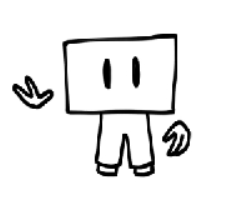
So. You are a rectangle-man.

Hello!

You need to talk to the Triangle Princess in the Triangle Palace. Problem: you are a lowly rectangle, and scum like you won’t be allowed anywhere near her. So you’re gonna have to get some shape reassignment surgery, courtesy of your local mad scientist.

Graphically, the game is charming. It’s black and white, and feels like an old-timey adventure game.

Your humble home

And there’s a world to explore!

Hey, there’s your buddy, the hexagon! He’s kind of a douche.

This is less a “game” and more an elaborate joke. Which I largely don’t mind, because it’s a pretty funny joke. I’m honestly impressed at the sense of humor demonstrated by the snarky narrator as your boy Rector the Rectangle does adventure game shit, because I’m pretty sure the game’s developer speaks French as their primary language. Getting laughs in a second language? Well done.

I’m less enamored of the actual gameplay. As you wander through the world, you need to rub yourself up against and interact with anything and everything you can, because you never know when you’re going to stumble across the items that will be the keys to unlock the game’s various puzzles. Make sure you remember that shit, and make sure it’s selected when you interact with the whatsit that wants it.

Rub yourself against the world, rub things against the world, rub things against each other. That’s the game.

Still, it wasn’t awful. I would have appreciated a few more hints about where to find the next whatever I needed, but it gave me a few laughs. It’s a playful, silly little trifle, and not the worst way to spend half an hour. If you remember playing games like this, probably worth a look.

Need another game. Hit me!

Page 56, Game 25: Catlandia: Crisis at Fort Pawprint by catlandia

“Be A Cat”

So, knock shit down, nap in sunlight, and lick myself? I’m in.

Justice Playthrough #60: That Which Binds Us

Eh, this one isn’t working for me.

Page 49, Game 18: That Which Binds Us by Crystal Game Works

I think they call this a “visual novel?” It’s not really a game; there are only a handful of decision points, and they honestly seem pretty inconsequential. Stills of two people appear on-screen, gesturing a bit and changing facial expressions as their dialog prints out below them. Behind them is a static setting — pretty obviously a canned resource of some variety, given that the “bail bondsman’s office” is less “Max Cherry” and more “Tastefully decorated living room.”

This particular story follows a waitress whose scumbag boyfriend is in jail, yet again. She’d dump him, but she’s scared to, because criminal n’at. But, the bail bondsman has a magic knife that makes people forget about other people.

Would you like your jailbird boyfriend to forget about you?

Yes. Of course. That’s the plot.

The “game” is just click-n-read, click-n-read, click-n-read. Not my bag, really, but I don’t want to get hung up on that. If this is honestly mostly just a piece of fiction, I can at least do it the courtesy of evaluating it on those terms.

This does not work for me as a piece of fiction. In a previous life I had aspirations as a fiction writer, so I’ve read my share of stories made with more passion and ambition than actual skill. This gave me flashbacks to the days of telling people “Sorry, I don’t think this works” and trying to find constructive explanations for why and how they could possibly make the next story better.

“That Which Binds Us” suffers from two common rookie mistakes: bad pacing, and underwhelming characters. The story is clearly a romance between the waitress and the magic bail bondsman, but the story is hopelessly mired in the minutiae of their conversations. The writer clearly finds these characters and their interactions fascinating, but has neglected to give the reader any particular reason to care.

There are, of course, hints of a larger story, that our adorable magic bailboy is in way over his head with some sort of organized crime element. In theory, that’s the sort of thing that could generate tension, but in execution, it just put a spotlight on how little was actually happening.

After a good fifteen minutes or so, I gave up. The grinding pace had worn me down so thoroughly that even if the story did start to get good, I didn’t know if I’d be able to acknowledge it. And I wasn’t seeing indications that it was going to get good.

I wasn’t skeeved or pissed-off, I was just kinda bored. Can’t really recommend this one. But I certainly wish the author well, and if someone gave one of their later works a glowing recommendation, I’d be glad to give it a look.

Let’s see what’s on deck:

Page 20, Game 10: I want to be a Triangle by LeCroissantCyclope

“The little adventure of a Rectangle in Geoshape Prime.”

This just might be a metaphor for something.